
Die Wahl des richtigen Öls für Ihren Lkw ist entscheidend dafür, ob Ihr Fahrzeug reibungslos funktioniert. Entdecken Sie gemeinsam mit AutoX Furion Informationen über Lkw-Öl, um den am besten geeigneten Typ für Ihr Fahrzeug auszuwählen.
autox furion
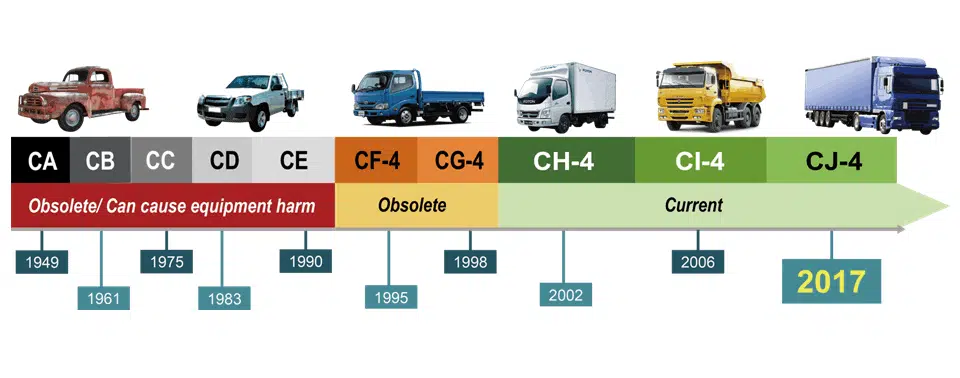
Zur Beurteilung der Qualität von Motoröl für schwere Lkw und Sattelzüge müssen zwei Normen berücksichtigt werden: die Ölqualität nach dem API-Standard (American Petroleum Institute) und die Viskositätsstufe nach dem SAE-Standard (Society of Automotive Engineers). API-Qualitätsstufen für Benzinmotoren werden mit dem Buchstaben „S“ angegeben, zum Beispiel: SA, SB, SC, SE, SF, SG, … bis SN (höchste Stufe). API-Stufen für Dieselmotoren werden mit dem Buchstaben „C“ angegeben, zum Beispiel: CA, CB, CC, CD, …
Dieser Index wird oft als Ölqualität oder -stufe bezeichnet. Je höher die Stufe, desto fortschrittlicher die Additive, die den anspruchsvollen Anforderungen moderner Fahrzeugkomponenten gerecht werden.
Motoröl kann mehr als eine Stufe haben, was bedeutet, dass es sowohl für Benzin- als auch für Dieselmotoren verwendet werden kann. Fahrzeugbesitzer sollten die API-Bezeichnung prüfen, um die bevorzugte Qualitätsstufe zu ermitteln.
SAE steht für Society of Automotive Engineers, und die Viskosität wird auf zwei Arten gemessen: Einbereichsöl und Mehrbereichsöl.
- Einbereichsöl
- Designated as SAE 40, SAE 50: Viscosity decreases rapidly with temperature. This type of oil is perfectly suitable for use in the Vietnamese environment. However, when the engine is cold, the oil will be slightly thicker and not pumped effectively to the engine parts; the heat dissipation capacity of single-grade oil is also very poor. This type of oil is commonly used for 2-stroke engines, lawnmowers, agricultural and industrial machinery, or for users to mix with special additives.
- Mehrbereichsöl
- Designated as SAE 20w-40, SAE 15w-40: The viscosity of this oil is more stable with temperature compared to single-grade oil. Furthermore, the oil’s viscosity remains consistent even at low temperatures, thus improving lubrication when the engine is „cold“…
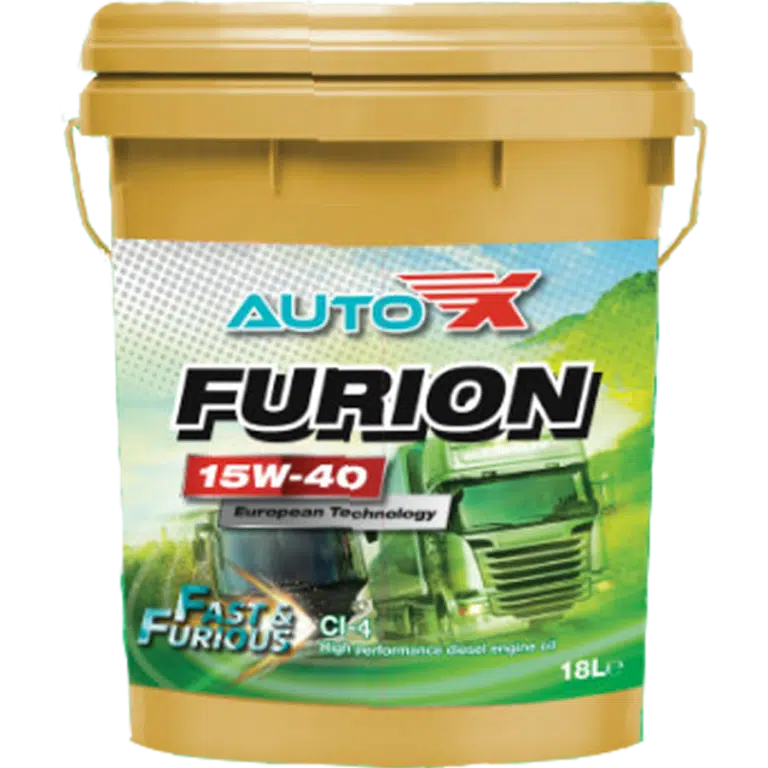
For example, AutoX Furion SAE 15W40 has more stable viscosity with temperature compared to single-grade oils.
autox furion
Viscosity plays a crucial role in the properties of engine oil. According to the SAE viscosity rating system, oils with the letter „W“ are multi-grade, suitable for all seasons. The SAE classification system is quite complex, involving many different concepts. However, the main factors can be identified. For multi-grade oils, the letters SAE are followed by a prefix such as 5W, 10W, 15W, or 20W.
The numbers before the „W“ (also known as the initial rating) indicate the temperature range at which the oil has sufficient viscosity to start the vehicle in cold conditions. To determine the starting temperature based on this rating, simply subtract the number from 30, but in negative temperatures. For example, 10W oil will start well at -20°C, and 15W oil will start well at -15°C.
Engine oils in cold climates are typically 5W, 10W, or 15W, but most products in Vietnam are only 10W, 15W, or 20W. While this isn’t crucial for starting in Vietnam, where the weather isn’t usually very cold, manufacturers add additives to meet cold-start requirements, so lower viscosity oils are more expensive. 10W, 15W, and 20W oils are mid-priced and are therefore imported or produced in Vietnam by many lubricant companies.
The „W“ in multi-grade oils may be followed by 40, 50, or 60. Generally, the higher the number, the higher the viscosity, and vice versa.
This indicates the equivalent viscosity at operating temperature. For example, with 10W40 oil, at normal temperatures it is quite thin, equivalent to SAE 10 oil, but at high temperatures in contact with machine parts, the oil will form a film with a viscosity equivalent to SAE 40 oil.
AutoX Lkw-Motoröl wird mit fortschrittlicher europäischer Technologie hergestellt und erfüllt Schweizer Qualitätsstandards, was eine optimale Leistung für Ihre Lkw-Flotte gewährleistet.